
For years, the New York City Department of Sanitation (DSNY) operated one of the most intrusive vehicle impound policies in the country. Under its “derelict vehicle” policy, the City could seize a vehicle, declare it junk, and destroy it—without ever notifying the owner, lienholder, or lessor.
There was no opportunity to recover the vehicle, challenge the City’s determination, or protect a secured interest before the vehicle was dismantled or disposed of. The consequences were severe: total losses for lienholders and significant harm to their customers.
That has now changed.
What Changed—and Why It Matters
A federal lawsuit brought by a national lienholder challenged the City’s longstanding practice and established an important due process principle: before the City dismantles or disposes of a seized vehicle, affected parties must receive notice and an opportunity to be heard.
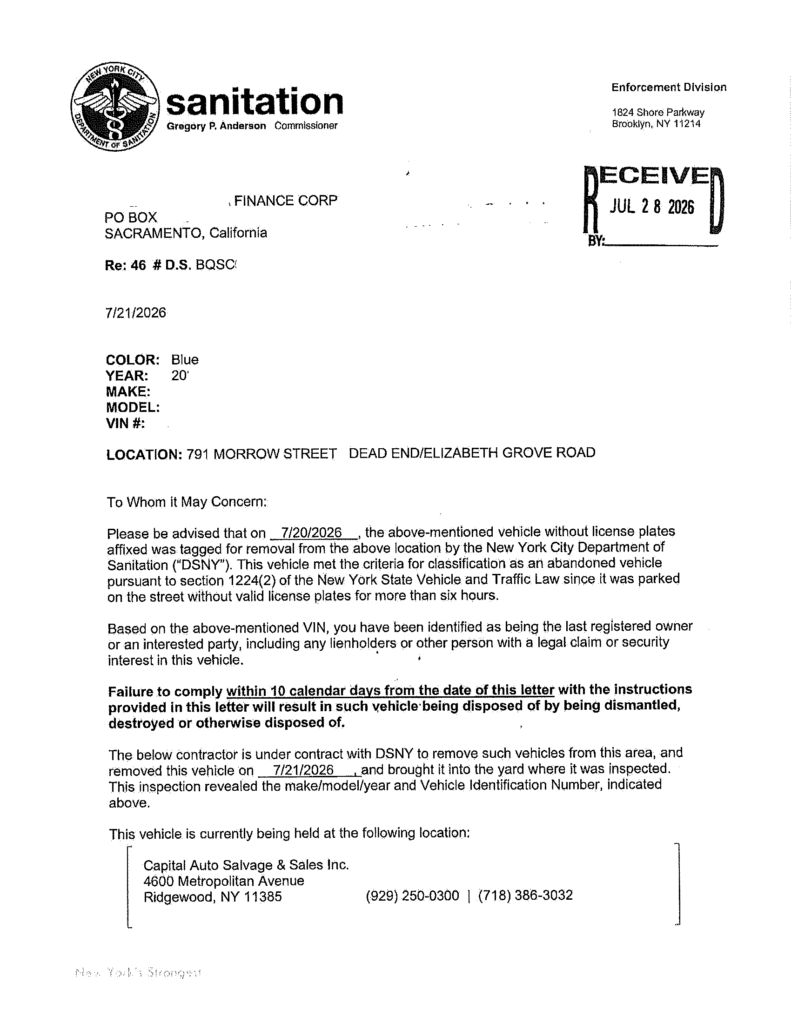
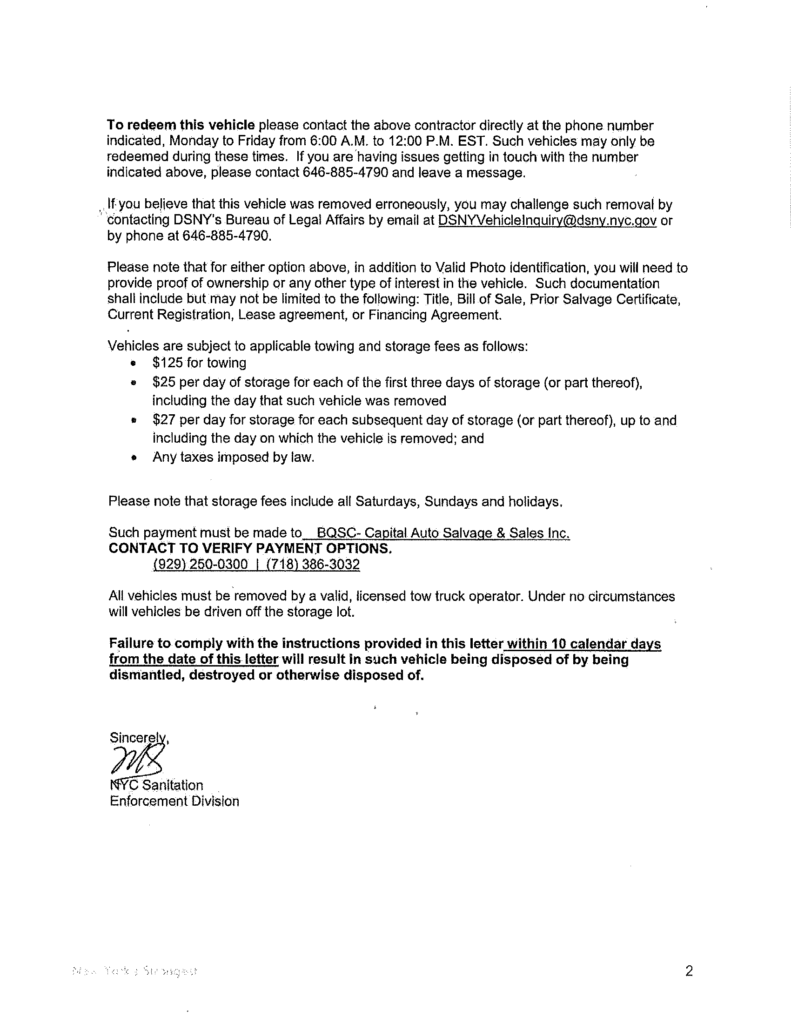
As a result, lienholders and leasing companies will now receive formal notice whenever a vehicle is processed under the DSNY’s derelict vehicle policy. The notice explains how to:
- Inspect the vehicle
- Redeem the vehicle
- Request a hearing
- Comply with applicable response deadlines
This represents a significant shift in how the City handles these cases. Instead of vehicles disappearing without notice, the process is now transparent, reviewable, and designed to protect property and security interests while reducing avoidable financial losses.
The New Notice and Hearing Process
Under the revised procedures, DSNY must provide notice by:
- Certified mail (return receipt requested), or
- Email, when the recipient has authorized electronic notice.
A sample of the notice that lienholders and lessors will receive is attached to this article.
Because these notices contain important legal deadlines, lienholders and lessors should treat them as time-sensitive legal documents and respond promptly to protect their rights.
What Lienholders and Lessors Should Do
If your organization finances or leases vehicles, you should:
- Review every DSNY notice immediately upon receipt.
- Calendar the 10-day response deadline.
- Promptly determine whether to redeem the vehicle or request a hearing.
- Consult legal counsel if assistance is needed in evaluating redemption costs, protecting lien rights, or coordinating vehicle recovery from DSNY.
The Strategy Behind the Victory
This reform was achieved through litigation strategy developed and executed by the Meola Law Firm.
The outcome reinforces a principle we frequently share with our clients: the old saying that “you can’t fight City Hall” does not hold up against a well-crafted legal strategy, careful preparation, and determined advocacy.
This victory not only protects the rights of lienholders and lessors but also establishes a more transparent and constitutionally sound process for everyone affected by DSNY’s derelict vehicle program.